Golf Simulator Netting: Buying and Installation Guide
Choose simulator netting by mesh, ball speed, and mounting method, with containment rules for walls, ceilings, and frames.
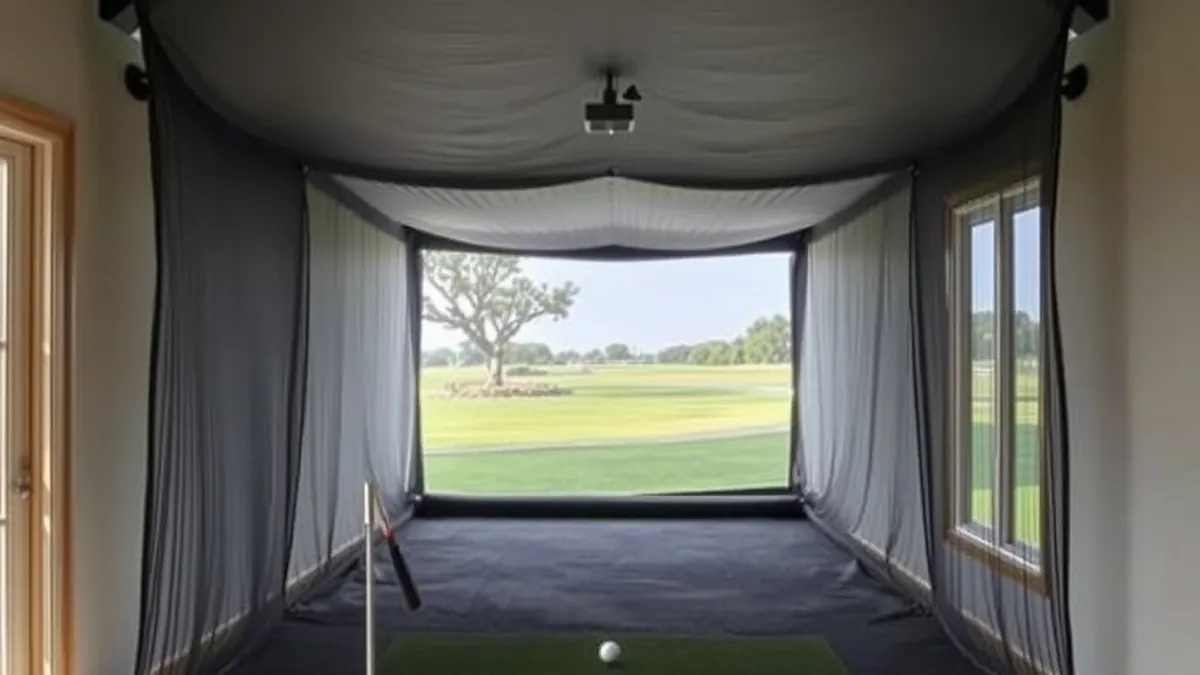
Golf simulator netting is a protective barrier that stops errant balls from damaging walls, windows, or people. It mounts inside an enclosure or hangs as a standalone net.
- Primary use
- Ball containment in simulator rooms
- Common materials
- Nylon, polyester, polyethylene
- Typical cost
- $100–$800+ depending on size
- Key measurement
- Height, width, and mesh size
Some links on this page are affiliate links.If you buy through them we may earn a commission at no extra cost to you. We do not accept payment for rankings. Read the full disclosure.
Golf simulator netting is a safety barrier designed to stop golf balls from leaving the simulator area. It protects walls, windows, lighting, and anyone standing near the bay from errant shots, shanks, and ricochets. Netting is measured by height, width, material, and mesh size before it is cut or ordered to fit a specific room.
Why Netting Comes Before Hardware
Room measurements determine what netting you can install, not the other way around. A standard simulator bay often needs at least 10 feet of width, 10 feet of depth, and 8.5 to 10 feet of ceiling height. If your room is smaller, you still need netting, but you may need a smaller panel or custom cut size to avoid sagging that lets balls roll through gaps.
Before ordering, measure the full enclosure footprint. Add at least 12 inches of overrun on each side if you plan to hang netting freely, because balls can spray wide on mishits. Ceiling netting is also worth considering if you have low overhead lights or a second floor directly above the hitting area.
Common Netting Materials
Most golf simulator netting is made from one of three synthetic materials:
- Nylon: Strong, abrasion-resistant, and common in commercial driving range nets. It absorbs energy well but can absorb moisture over time.
- Polyester: Resists UV degradation and holds its shape in humid basements or garages. It is slightly less elastic than nylon.
- Polyethylene: Lightweight and often used for budget panels. It is generally less durable for high-speed ball impacts.
Mesh size matters as much as material. A 1-inch square mesh is standard for golf ball containment. Smaller mesh, such as 5/8 inch, reduces the chance of a ball squeezing through but costs more per square foot.
Sizing and Load Estimates
Netting is sold by the square foot or as pre-cut panels. To estimate how much you need, multiply the height by the width of each side you want to cover. For example, a back wall that is 10 feet wide and 9 feet tall requires 90 square feet of netting. If you also cover two side walls that are 10 feet long by 9 feet tall, that adds another 180 square feet, for a total of 270 square feet before overrun.
Cost estimates vary widely. A small 10-by-10-foot panel might cost $150 to $300, while full enclosure netting for a standard room can run $500 to $800 or more, not including mounting hardware. These figures are estimates; actual prices depend on material, ply count, and supplier.
For load context, a golf ball weighs about 1.62 ounces and can leave a driver at over 150 miles per hour. Netting must absorb that kinetic energy without tearing or transferring too much force to the mounting points. Heavy-duty multi-ply netting is rated for repeated impacts, but no consumer net is indestructible. Inspect it monthly for fraying, especially near grommets and anchor points.
Mounting Methods
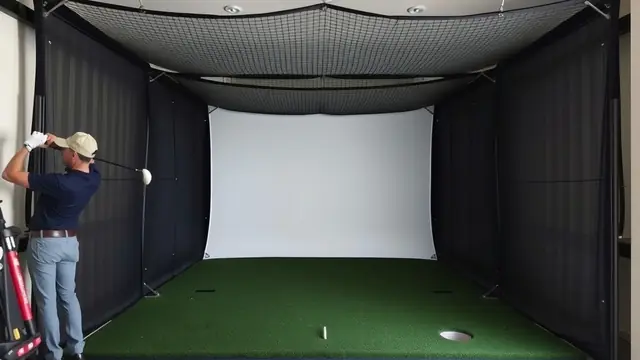
Netting typically attaches to a frame using bungee cords, rope, or dedicated clips. The goal is to keep the net taut enough that a ball loses energy on contact rather than punching through or rolling to the floor.
Common mounting options include:
- Ceiling-to-floor poles: Telescoping poles hold netting in place without drilling into walls, useful for rentals or multi-use rooms.
- Wall-mounted brackets: Fixed brackets provide a permanent anchor for enclosure frames.
- Overhead track systems: Netting slides on a track so you can open or close the hitting bay when the simulator is not in use.
Leave slack at the bottom so the net can billow slightly on impact. A net pulled too tight transfers more force to the frame and wears out faster.
Netting vs. Impact Screens
New simulator owners sometimes confuse netting with impact screens. An impact screen sits directly in the ball’s flight path and displays the simulated shot. Netting surrounds the hitting area to catch balls that miss the screen or bounce back.
If you already have an impact screen, you still need side and ceiling netting for mishits. A shanked shot can travel 45 degrees off line, which means it can leave a narrow bay quickly. Side netting reduces the risk of hitting a window, television, or bystander.
Maintenance and Replacement
Netting degrades with UV exposure, temperature swings, and repeated ball strikes. In a basement with no sunlight, a net can last several years. In a garage with a door that opens regularly, UV exposure shortens lifespan.
Check the mesh after every few practice sessions. Look for holes larger than a golf ball, loose grommets, and frayed edges. Small tears can sometimes be repaired with netting tape, but a compromised panel should be replaced before the next session.
Replacement cost follows the same math as the original purchase. If you bought 270 square feet at an estimated $3 per square foot, replacing the full enclosure costs roughly $810 plus hardware. Buying individual side panels instead of a full kit can lower replacement costs when only one section wears out.
Where Netting Fits in a Build
Netting is part of the enclosure, not the launch monitor or hitting mat. If you are planning a full simulator room, decide on the enclosure and netting before selecting a screen or projector, because the net defines the safe hitting zone. For more on complete builds, see our guide to golf simulator enclosure and our breakdown of golf simulator cost. If you are still choosing a launch monitor to pair with the setup, our best launch monitor overview covers options at different price points.
A properly sized net costs less than repairing a drywall hole or replacing a broken window, and it makes the simulator safer for everyone in the house. Measure the room first, choose the material and mesh size second, and buy hardware last.
Frequently asked questions
What is golf simulator netting used for?
It contains golf balls inside the simulator space so errant shots do not hit walls, windows, furniture, or people standing nearby.
How thick should simulator netting be?
Most residential netting uses multi-ply nylon or polyester rated for golf ball impacts; exact ply count depends on ball speed and distance from the net.
Can I use regular cargo netting?
No. Cargo netting is not engineered for repeated golf ball impacts and can tear or allow balls to pass through under simulator conditions.
How much does golf simulator netting cost?
Small panels start near $100, while full enclosure netting for a standard room often runs $300 to $800 or more before hardware.
Do I need netting if I have an impact screen?
Yes. An impact screen stops the ball at the hitting point, but netting protects the sides, ceiling, and floor from mishits and shanks.
Where can I buy golf simulator netting?
Specialty golf simulator retailers and enclosure manufacturers sell netting by the panel or as part of a complete bay kit.
Sources
Some links are affiliate links.If you buy through them we may earn a commission at no extra cost to you. We do not accept payment for rankings. Read the full disclosure.