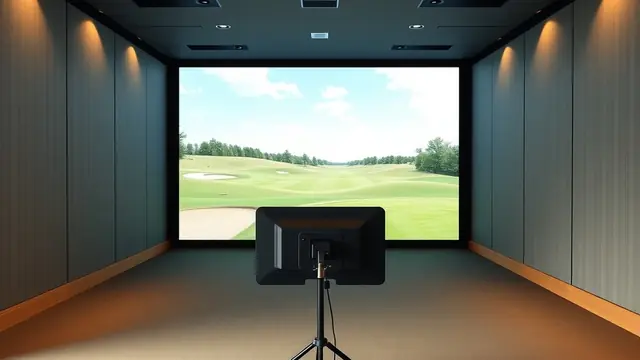
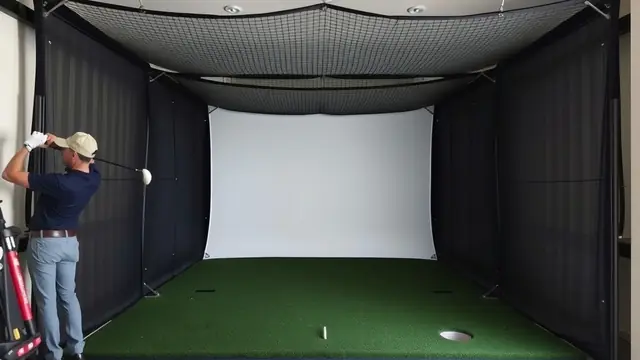
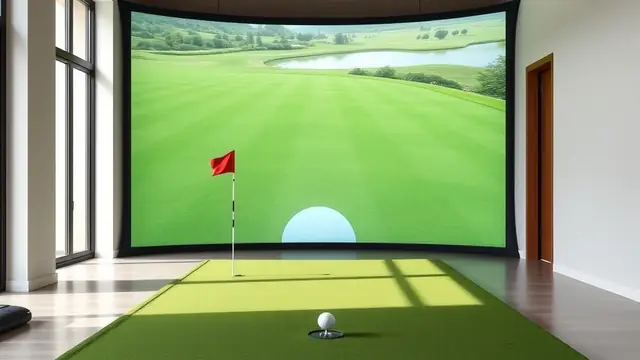
Golf simulator screens: impact and size
What impact screens are made of, how to read a ball-speed rating, and what screen size fits a 10 to 12 ft bay without crowding the frame.
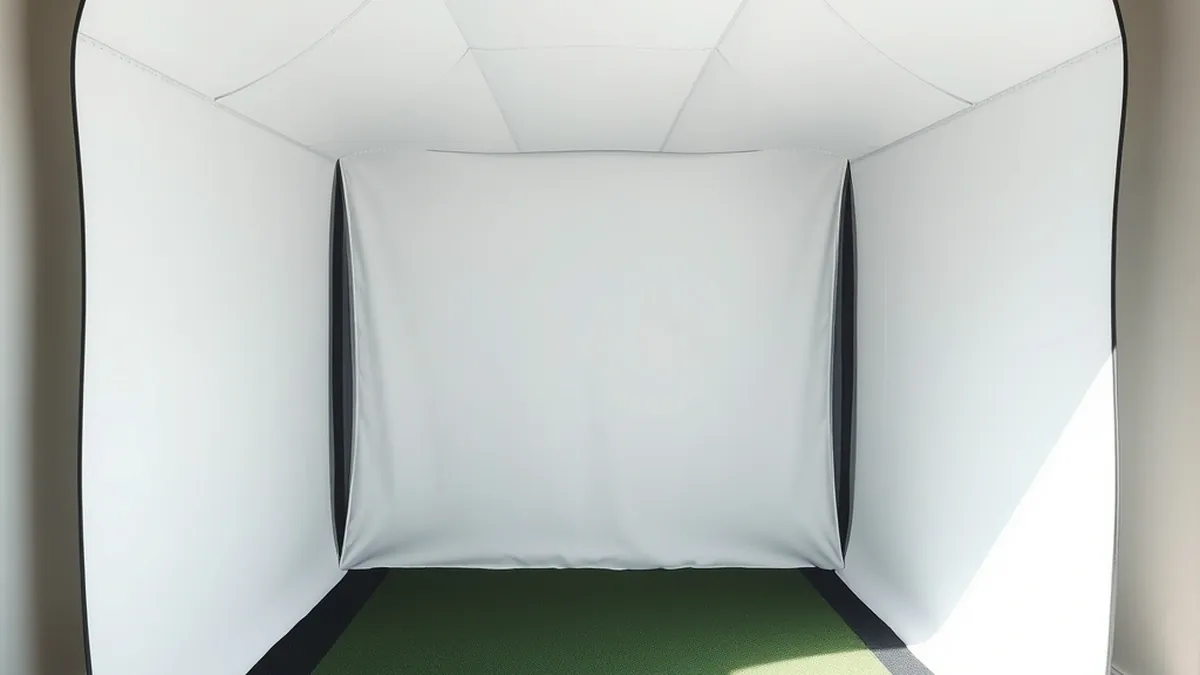
A 10 ft bay fits an 8 ft wide screen and a 12 ft bay fits a 10 ft screen, leaving about 1 ft of frame and clearance on each side. Buy an impact-rated woven screen, tension it evenly, and match the aspect ratio to the projector.
- 10 ft bay
- 8 ft wide screen, 4.5 ft high
- 12 ft bay
- 10 ft wide screen, 5.6 ft high
- Standard aspect ratio
- 16:9
- Clearance behind screen
- 6 to 12 in
Some links on this page are affiliate links.If you buy through them we may earn a commission at no extra cost to you. We do not accept payment for rankings. Read the full disclosure.
| Tensioned | Framed | |
|---|---|---|
| Surface | Pulled tight with straps or a ratchet | Attached to a frame with bungees |
| Image quality | Flat, consistent, fewer wrinkles | Can sag or ripple over time |
| Installation | More hardware and adjustment | Simpler and usually cheaper |
| Bounce-back | Predictable when tension is even | Varies with bungee tension |
| Best for | A permanent dedicated bay | A first build or a rental wall |
A golf simulator screen is the one part of the bay that takes a direct hit on every shot. It has to stop the ball, survive thousands of impacts, and still show a bright, flat image. Those two jobs pull in different directions.
An impact screen is a thick, woven or laminated fabric rated to absorb golf balls at a stated speed, then reflect a projector image. It is not the same product as a home theater screen, and it should never be chosen on size alone.
The short answer
For a 10 ft wide bay, buy an 8 ft wide screen. For a 12 ft bay, buy a 10 ft screen. Leave about 1 ft on each side for the frame and clearance, choose 16:9 to match most simulator software, and buy a screen rated above your ball speed.
If the bay is 14 ft or wider, a 12 ft screen is the comfortable choice. The extra width looks better and gives the frame room to absorb a mishit without putting the screen edge in the swing path.
What an impact screen has to survive
A driver ball speed of 150 mph is ordinary for a fit amateur; 180 mph is elite. The screen has to absorb that energy, hold its shape, and return the ball without launching it back at the player.
That is why impact screens are sold by ball-speed rating rather than by diagonal size. A screen rated for 150 mph is not a good match for a 180 mph player, even if the dimensions fit. Buy margin above your own speed, especially if the bay will host friends.
The screen also has to survive repetition. The center of the screen takes far more hits than the edges, so wear appears there first. A screen that is tight and evenly supported lasts longer than one that flaps against a frame.
Screen materials
Most impact screens use a woven polyester or nylon base, sometimes with a vinyl or urethane coating. The weave absorbs energy; the coating improves image reflection and protects the fibers.
A plain projection screen is usually a thin matte white fabric or a vinyl sheet. It is designed to reflect light, not to stop a ball, and it will crease, stretch, or tear in a bay.
Look for three things in the specification: the ball-speed rating, the weight or thickness of the fabric, and whether the screen is designed for front projection. A heavier screen usually absorbs more energy and hangs flatter, but it also needs a stronger frame and tension system.
Tensioned vs framed
A tensioned screen is pulled tight with straps, a ratchet, or a dedicated tension frame. The surface stays flat, the image stays even, and the bounce-back is more predictable because the tension is consistent across the screen.
A framed screen attaches to an enclosure frame with bungees or cords. It costs less and is easier to install, but the surface can sag between attachment points, and the bounce varies with how tight each bungee is pulled.
For a permanent dedicated bay, tension is worth the extra hardware. For a first build or a wall that may move, a framed screen is a reasonable start.
Seams and aspect ratio
Wide screens are often made in panels, and the seam is the weak point. A seam down the middle of the image can show as a faint line, and it can wear faster than the surrounding fabric. Ask whether the screen is seamless, and if not, where the seam falls.
Aspect ratio should match the projector’s native resolution. Most simulator software renders at 16:9, which gives a 4.5 ft high image on an 8 ft wide screen and a 5.6 ft high image on a 10 ft screen. A 16:10 or 4:3 screen wastes projector pixels or forces scaling.
Match the screen to the projector, not the other way around. The projector guide explains how throw ratio and lumens change with screen width.
What size screen for a 10 to 12 ft bay
Measure the clear width inside the enclosure, then subtract about 1 ft on each side. The remaining width is your maximum screen width.
| Bay width | Screen width | 16:9 height | Side margin |
|---|---|---|---|
| 10 ft | 8 ft | 4.5 ft | 1 ft each side |
| 12 ft | 10 ft | 5.6 ft | 1 ft each side |
| 14 ft | 12 ft | 6.8 ft | 1 ft each side |
| 16 ft | 14 ft | 7.9 ft | 1 ft each side |
| 18 ft | 16 ft | 9.0 ft | 1 ft each side |
These are starting dimensions, not a building code. The enclosure frame, the mat position, and the driver’s swing width can all reduce the usable width. Check the full bay in the room dimensions guide before you order fabric.
Mounting and clearance
Hang the screen from a top rail or a tension bar, and anchor the bottom so it does not lift on impact. Leave 6 to 12 in between the screen and the wall or net behind it; the screen needs room to flex, and the gap keeps a hard hit from transferring force into the wall.
The screen is not structural. It should hang from the enclosure or a dedicated frame, not from drywall anchors or a garage door track. If the frame is anchored to masonry, use the correct anchors and check local code.
For a full enclosure, the screen, side nets, and frame work as one system. The enclosure guide covers how the pieces join and where the frame needs bracing.
Care and replacement
Vacuum the screen gently with a brush attachment to remove dust, and wipe marks with a damp cloth using mild soap. Do not scrub the weave, and do not fold the screen for storage; creases become weak points.
Replace the screen when the center shows a worn patch, the fabric sags, or a tear appears. A home bay used weekly may last several years; a commercial bay can wear through in a year. Rotating the hitting mat spreads the impact pattern and buys time.
The short version
Buy an impact-rated screen, not a projection screen. Size it to the bay with about 1 ft of margin on each side, match 16:9 to the projector, and tension it evenly. A 10 ft bay takes an 8 ft screen; a 12 ft bay takes a 10 ft screen.
Then price the screen with the enclosure, mat, and projector as one purchase. The golf simulator cost breakdown shows how the screen fits into the total, and the enclosure guide covers the frame that holds it.
Frequently asked questions
What size screen fits a 10 ft wide golf bay?
An 8 ft wide screen is the usual choice. That leaves about 1 ft on each side for the frame, enclosure, and clearance, and gives a 4.5 ft high image at 16:9.
What is an impact screen rated for?
Impact screens are rated by the ball speed they can absorb, usually stated in mph. Look for a rating above your driver ball speed with margin; a 150 mph amateur and a 180 mph elite player need different screens.
Can I use a regular projector screen in a golf bay?
No. A projection screen is thin and smooth and will tear or stretch when hit. An impact screen is thicker, woven, and designed to absorb energy while still reflecting the image.
Should the screen be seamless?
A seamless screen avoids a visible line down the middle of the image and a seam that can wear faster than the rest of the fabric. Wide screens are often seamed, so ask how the seam is constructed and whether it sits outside the main hitting area.
How much space do I need behind the screen?
Leave 6 to 12 in between the screen and the wall or net behind it. The screen absorbs most of the ball energy, but it needs room to flex, and a tight gap can transfer force into the frame or wall.
How often should I replace an impact screen?
Replace it when the center shows a worn patch, the fabric sags, or a tear appears. A screen used weekly may last several years; a commercial bay can wear through in a year. Keep the hitting area clean and rotate the mat to spread the load.
Sources
Some links are affiliate links.If you buy through them we may earn a commission at no extra cost to you. We do not accept payment for rankings. Read the full disclosure.