Heating and cooling a simulator bay
Garage bays swing 20–30°F without conditioning. Mini-split sizing, insulation, humidity, and projector heat, with cost by climate.
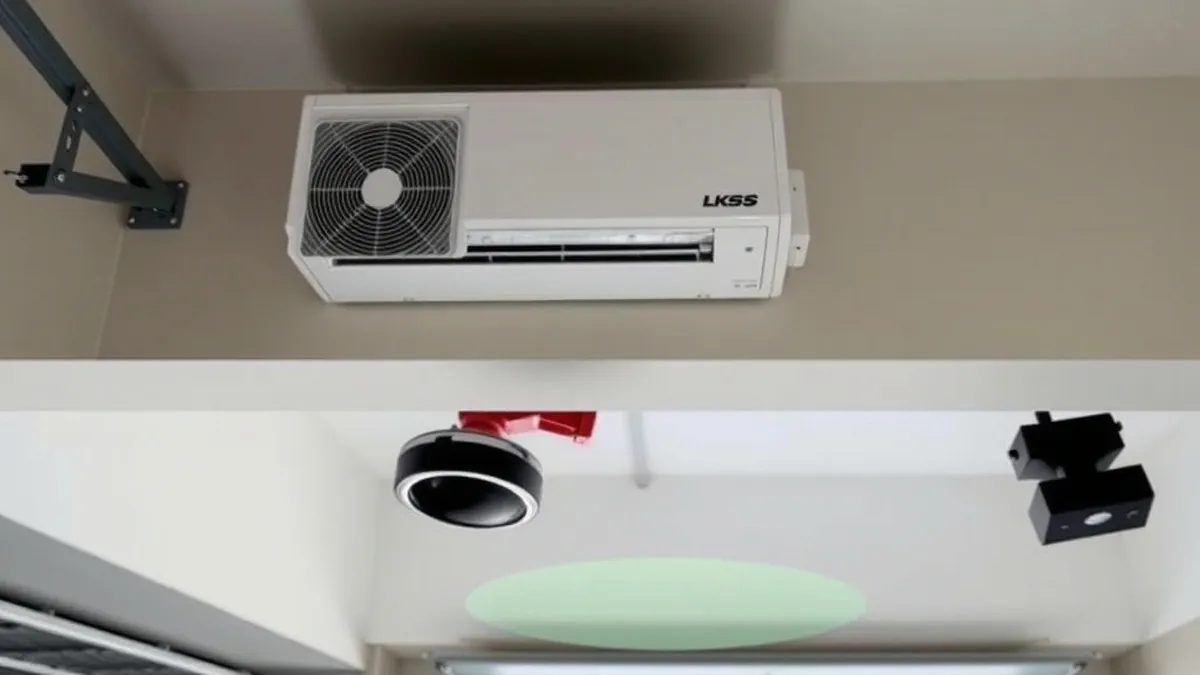
A 12×20 garage bay needs roughly 6,000–9,000 BTU of heating and cooling, which points to a 9,000 BTU mini-split. Air sealing and insulation matter more than equipment size; budget $3,000–$5,000 installed.
- Bay size used
- 12 × 20 ft, 240 sq ft
- Heat load
- About 6,000–8,000 BTU
- Equipment
- 9,000 BTU mini-split
- Comfort target
- 62–75°F, 30–50% RH
Some links on this page are affiliate links.If you buy through them we may earn a commission at no extra cost to you. We do not accept payment for rankings. Read the full disclosure.
A garage simulator bay needs conditioning for the same reason a workshop does: the space was built to store cars, not people. An unconditioned two-car garage can swing 20–30°F between morning and evening, and a sealed bay with a 500W projector adds heat every hour you play.
Conditioning means controlling temperature and humidity together, not just blowing cold or hot air into the room.
Why garage bays swing
Most garages have a thin door, an uninsulated slab, and walls that were never intended to be inside the thermal envelope. An attached garage borrows some heat from the house through the shared wall. A detached garage tracks outdoor temperature closely.
The door is the biggest single loss. A standard uninsulated panel has an R-value of roughly 1 to 2, and the seams leak air. Sun on the door adds load in summer; a cold slab pulls heat out of the room in winter.
The result is a room that is usable in spring and fall and miserable in July and January. Conditioning fixes the temperature, but only after air sealing and insulation reduce the load.
Sizing a mini-split
The common planning rule for a garage bay is 20–30 BTU per square foot. For a 12 × 20 ft bay, that is 240 sq ft × 20–30 = 4,800–7,200 BTU. Add 1,000–2,000 BTU for a west-facing door, windows, or two players, and a 9,000 BTU unit is the usual choice.
| Bay size | Floor area | Load at 25 BTU/sq ft | Suggested unit |
|---|---|---|---|
| 10 × 14 ft | 140 sq ft | 3,500 BTU | 9,000 BTU |
| 12 × 20 ft | 240 sq ft | 6,000 BTU | 9,000 BTU |
| 14 × 25 ft | 350 sq ft | 8,750 BTU | 12,000 BTU |
| 20 × 20 ft | 400 sq ft | 10,000 BTU | 12,000–15,000 BTU |
These are planning estimates, not a Manual J calculation. A contractor should account for insulation, glazing, door orientation, and the number of people in the room. Oversizing a mini-split is a real mistake: it short-cycles, dehumidifies poorly, and feels clammy.
Installed cost for a 9,000 BTU single-zone mini-split is commonly $3,000–$5,000, including the line set, pad, disconnect, and startup. A 12,000 BTU unit runs $3,500–$6,000. Cold-climate models cost more.
Insulation and air sealing first
Every dollar spent on air sealing and insulation reduces the size of the equipment you need. Start with the ceiling: if the space above is unconditioned, R-30 to R-38 is the target for a conditioned garage. Walls should reach R-13 to R-15.
Seal the top plates, the door frame, and every penetration. A garage door insulation kit costs $100–$300 and makes the door feel less like a radiator. Weatherstripping and a bottom seal close the gaps that air sealing cannot.
Do not seal a garage so tightly that combustion appliances backdraft. If a furnace or water heater shares the space, it needs its own combustion air and venting. A carbon monoxide alarm belongs in any garage with a fuel-burning appliance.
Heat from the projector and electronics
A projector is a space heater with a lens. Most home units draw 300–500W, and nearly all of that becomes heat. At 3.41 BTU per hour per watt, 500W adds about 1,705 BTU/h to the room.
That is roughly 20 percent of a 9,000 BTU cooling load, concentrated at the ceiling. Keep the projector’s intake and exhaust clear, clean the filter on schedule, and avoid enclosing it in a decorative box.
The same logic applies to the PC, the launch monitor, and the monitor. A gaming PC can add another 300–600W. In a small bay, equipment heat is enough to make the room uncomfortable an hour into a session even when the outdoor temperature is mild.
Cold is the other end of the range. Many projectors and launch monitors list an operating range starting around 41°F, and an unheated garage can sit below that for weeks. Let the equipment reach room temperature before powering it on, and check the manual for the exact range.
Humidity and condensation
Humidity matters more than most owners expect. A garage slab stays cool, and cool surfaces condense moisture when warm, humid air arrives. That moisture finds the screen, the lens, and the mat.
Aim for 30–50 percent relative humidity. A mini-split in dry mode handles moderate humidity. A dedicated 30–50 pint dehumidifier is the backup for damp climates, and it needs a drain or a hose so you are not emptying a bucket every day.
Avoid rapid temperature swings. Bringing a cold garage up to 70°F in an hour can fog a projector lens and dampen a screen. Ramp the temperature over several hours, and let equipment reach room temperature before powering it on.
Fans, vents, and air movement
A ceiling fan helps in a room with a 9 ft ceiling or higher. Run it on low, blowing down in winter to mix warm air off the ceiling, and up in summer for a gentler draft. A fan that hangs into the swing path is a hazard, so use a low-profile or hugger model.
Fans do not cool air. They make a room feel cooler by moving air across your skin, which helps in a bay that runs a few degrees warm. They do nothing for humidity.
Ventilation is separate from conditioning. A garage that stores a car, a mower, or paint needs exhaust or an ERV, especially if it is attached to the house. A sealed, conditioned bay with no fresh air gets stale and can trap fumes. An ERV exchanges heat and moisture without dumping your conditioned air outside.
Cost by climate
| Climate | Main challenge | Recommended setup | Installed cost | Monthly run cost |
|---|---|---|---|---|
| Mild coastal | Damp evenings | 9,000 BTU mini-split + dehumidifier | $3,000–$5,000 | $15–$35 |
| Hot and dry | Afternoon heat | 12,000 BTU mini-split, R-30 ceiling | $4,000–$6,500 | $35–$70 |
| Hot and humid | Latent load | 12,000 BTU mini-split + 50 pint dehumidifier | $4,500–$7,000 | $50–$90 |
| Cold | Door loss, slab | Cold-climate heat pump + door insulation | $4,500–$7,500 | $40–$90 |
| Mixed | Both seasons | 9,000–12,000 BTU heat pump | $3,500–$6,000 | $30–$60 |
Running costs depend on your electricity rate. A 500W average draw for 3 hours a day is 45 kWh a month; at $0.17 per kWh that is $7.65. Heating at 1,500W for 4 hours a day is 180 kWh, or about $30.60 a month at the same rate.
Before you size equipment, confirm the bay geometry in the two-car garage guide and the room dimensions guide. The cost guide shows where HVAC sits in a full build budget.
The short version
Seal and insulate before you buy equipment. A 12 × 20 ft bay usually lands on a 9,000 BTU mini-split, with a cold-climate model or a backup heat source in severe winters. Control humidity, keep the projector’s airflow clear, and let the room come to temperature slowly.
Frequently asked questions
Can a mini-split heat a garage in winter?
A standard mini-split loses capacity as outdoor temperature drops. A cold-climate model rated for low ambient operation keeps working well below freezing, but you should check its rated capacity at your design temperature before relying on it as the only heat source.
How many BTU does a 12×20 simulator bay need?
Using 20–30 BTU per square foot, 240 sq ft needs 4,800–7,200 BTU before allowances for the garage door, windows, and equipment. A 9,000 BTU unit covers that range with headroom; a contractor should run a Manual J calculation for the final number.
Will the projector overheat in a small bay?
A projector adds roughly 1,700 BTU per hour for every 500W it draws, so a small sealed room warms up during a session. Keep the intake and exhaust clear, clean the filter, and stay within the operating range in the manual.
How do I control humidity in a garage simulator?
Aim for 30–50 percent relative humidity. Seal the room, run the mini-split in dry mode, and add a 30–50 pint dehumidifier if the garage stays damp. Avoid rapid temperature swings that cause condensation on the screen and lens.
Is a portable air conditioner enough for a simulator bay?
It can take the edge off for occasional use, but a portable unit needs a window or door vent, cools unevenly, and adds noise near the hitting area. A mini-split is quieter and holds temperature and humidity more steadily.
What temperature should the bay be for play?
Most people are comfortable at 62–75°F in light clothing. Keep the room above freezing for equipment, and let launch monitors and projectors acclimate before powering them after a cold soak.
Sources
Some links are affiliate links.If you buy through them we may earn a commission at no extra cost to you. We do not accept payment for rankings. Read the full disclosure.