SkyTrak vs Garmin R10
SkyTrak+ costs six times what the Garmin R10 does. The right pick depends on room depth, club data, and how much you will pay every year.
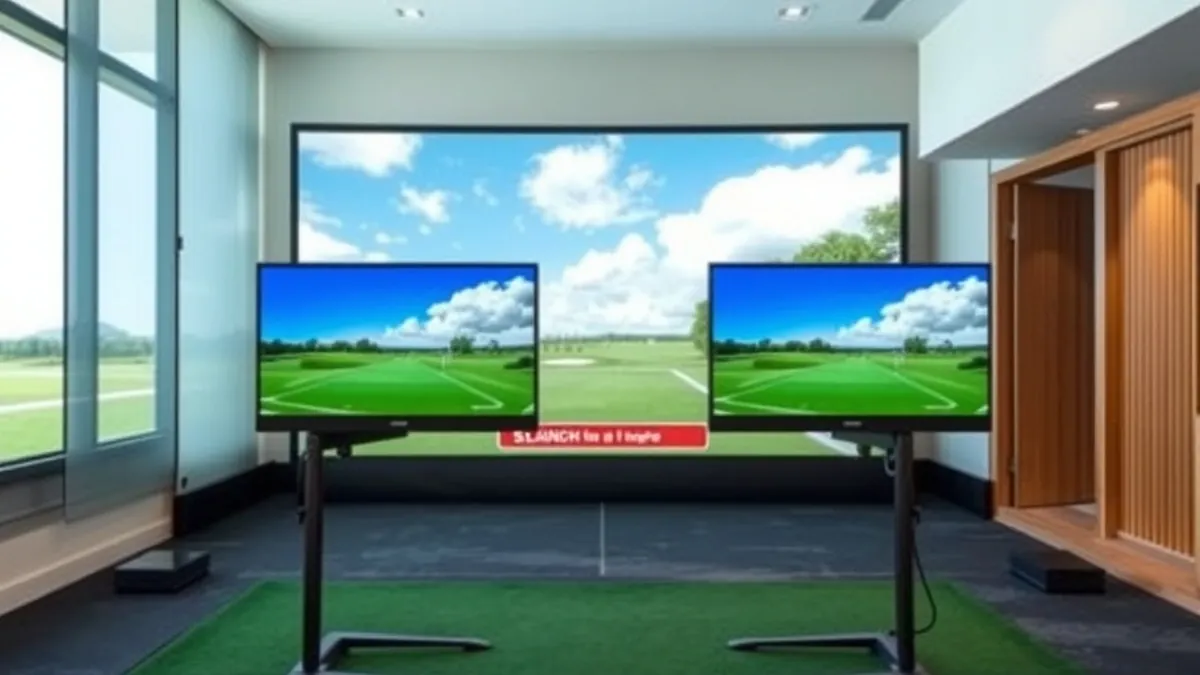
The Garmin R10 is the better first buy if you have 16 ft of depth and a $500 budget. The SkyTrak+ earns its $2,995 price in a shallow room, where its camera measures launch directly and its radar adds club path and face angle.
- Garmin R10
- Radar, 14 metrics, from $499.99
- SkyTrak+
- Camera plus radar, from $2,995
- Room depth that favors radar
- 16 ft or more
- Room depth that favors camera
- 8 to 10 ft to the screen
Some links on this page are affiliate links.If you buy through them we may earn a commission at no extra cost to you. We do not accept payment for rankings. Read the full disclosure.
| SkyTrak+ | Garmin R10 | |
|---|---|---|
| Price | from $2,995 | from $499.99 |
| Technology | Photometric camera for ball, radar for club | Doppler radar |
| Indoor space | Sits beside the ball; 8 ft to the screen | 6 to 8 ft behind the ball; 8 to 10 ft of flight |
| Subscription | $99.99 to $599.99 per year | Optional Garmin Golf plan |
| Data | Ball and club, including path and face angle | 14 metrics, including path and face angle |
| Accuracy approach | Measures launch in the hitting zone | Tracks flight and models short indoor shots |
| Best for | Shallow rooms and club data | Budget and portability |
The Garmin R10 and the SkyTrak+ are the two most common entry points into a home bay, and they are not really competitors. One is a $500 radar unit that wants space. The other is a $2,995 camera unit that fits a shallow room and adds club data.
A launch monitor is the sensor that measures the club and ball at impact and sends the result to a practice app or simulator. The measurement method matters more than the brand, because it decides how much room you need.
The short answer
Buy the R10 if your bay is 16 ft deep or you split time between the garage and the range. Buy the SkyTrak+ if your room is 8 to 10 ft to the screen, you want club path and face angle, and you will use the data often enough to justify the subscription.
If you are still choosing between categories, the launch monitor buyer’s guide lays out five units by room depth and budget. This page is the head-to-head.
Price: the gap is bigger than the sticker
The R10 lists at $499.99. The SkyTrak+ lists at $2,995, though both brands discount regularly and the SkyTrak+ has sold for $1,995 in recent promotions.
The sticker gap is not the whole gap. The SkyTrak+ needs a membership for course play and a PC for full simulation. A $700 to $1,200 PC plus a $299.99 Core plan puts a usable SkyTrak+ setup near $4,000. The R10 runs from a phone, so its first-year cost is closer to $600 plus an optional Garmin Golf plan.
That does not make the SkyTrak+ expensive. It makes it a different purchase: a camera-based practice tool with club data, not a cheap radar unit with a simulator app attached.
How each unit measures a shot
The R10 is pure radar. It sits behind the ball, watches the clubhead and ball with Doppler, and derives launch, spin, and carry from the flight. Garmin publishes 14 metrics, including club path and face angle.
The SkyTrak+ combines a photometric camera with dual Doppler radar. The camera photographs the ball in the hitting zone to establish launch conditions; the radar adds clubhead speed, path, face angle, and face-to-path. The ball does not need to fly far for the camera to do its job.
This is the central trade. Radar needs distance to watch; a camera needs a clean view at impact. The photometric vs radar explainer covers the physics in more detail.
Indoor space decides more than accuracy
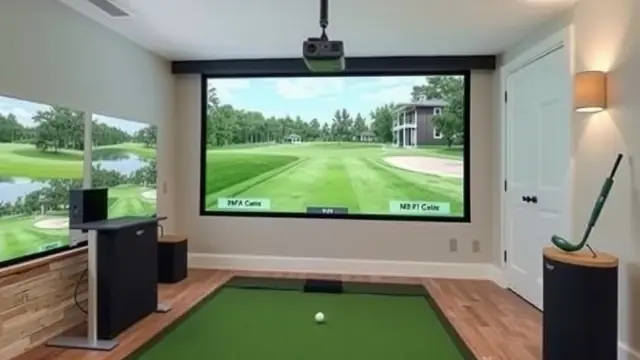
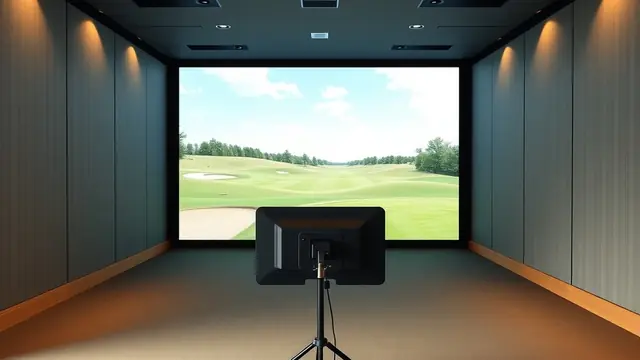
Garmin’s setup guidance calls for roughly 6 to 8 ft between the unit and the ball, and the R10 performs best with 8 to 10 ft of ball flight. In a 16 ft bay, that fits comfortably: 8 ft behind the ball, 8 ft to the screen.
The SkyTrak+ sits beside the ball, inside the 3 to 4 ft of clearance you need for the player, and needs about 8 ft from the ball to the screen. That is why it dominates the 10 ft garage build. You are not giving the sensor a short flight to interpret; you are giving it a clear view of impact.
Neither unit fixes a low ceiling or a bad mat position. Measure the room before you choose, then check the full envelope in the room dimensions guide.
Subscriptions and software
SkyTrak splits its app into tiers. Essential is $99.99 per year, Core is $299.99 with the Foresight course library or $349.99 with the Trackman library, and Elite is $599.99 for both. The free tier gives you range data but not the course play most people picture when they buy a simulator.
Garmin’s model is softer. Basic range data works without a membership, and an optional Garmin Golf plan adds simulator features and course access. The R10 also integrates with third-party software, which is where many owners end up.
Over five years, SkyTrak’s plans add $500 to $3,000. Garmin’s optional plan is cheaper, but it is still an annual cost. Put both next to the hardware price before you decide which unit is cheaper.
Data points: what you get for the money
The R10 covers the practice basics: ball speed, launch angle, launch direction, spin rate, spin axis, carry, total distance, apex, descent angle, clubhead speed, smash factor, club path, face angle, and attack angle.
The SkyTrak+ covers the same ball numbers and adds face-to-path, which is the metric that explains why a shot curved. It also pairs with simulation software that shows dispersion and club gapping.
More data is not automatically better. A player working on start line needs face angle and path. A player working on distance needs ball speed and spin. Both units deliver those; the SkyTrak+ adds a cleaner club-data story indoors.
Accuracy caveats worth knowing
No consumer launch monitor matches a tour-level system, and neither brand publishes a full error budget for every metric. Be skeptical of any review that gives a single accuracy percentage without saying which club, which metric, and which room.
Radar indoors is the bigger caveat. When the ball only flies 8 ft, the unit sees a fraction of the trajectory and calculates the rest. Spin is the number most likely to drift, and spin drives carry. A misread spin rate can make a good shot look short.
Camera units have their own failure modes. A scuffed ball, a shadow across the hitting zone, or a mat that sits too far from the unit can produce a no-read. Consistent ball position matters more than the brand of ball.
Who each one suits
Buy the R10 if you are building your first bay on a $2,000 to $3,000 total budget, you have 16 ft of depth, or you want one unit for the garage and the range.
Buy the SkyTrak+ if your room is 8 to 10 ft to the screen, you want club path and face angle without paying $6,000, and you will actually use course play. It is the more capable indoor unit, and the price reflects that.
Buy neither if you have less than 8 ft to the screen. In that room, an overhead camera such as the Uneekor EYE XO is the honest answer, and it costs more than both.
The short version
The R10 wins on price, portability, and outdoor use. The SkyTrak+ wins on indoor measurement, club data, and software depth. Room depth is the tiebreaker: 16 ft favors radar, 10 ft favors the camera.
Whichever you choose, price the rest of the bay first. A screen, mat, and enclosure can cost more than either monitor, and the golf simulator cost breakdown keeps the total honest.
Frequently asked questions
Is SkyTrak more accurate than the Garmin R10?
In a short indoor flight, the SkyTrak+ has an advantage because its camera measures the ball immediately after impact. Outdoors, with a full flight, the R10 has more trajectory to work with. Neither result is a guarantee, and setup quality affects both.
Can the Garmin R10 work in a 10 ft deep room?
It can produce numbers, but the unit prefers 8 to 10 ft of ball flight and 6 to 8 ft behind the ball. In a 10 ft room you are asking it to model much of the shot, so treat spin and carry as estimates rather than measurements.
Does SkyTrak+ require a subscription?
Basic range data works without one. Course play, cloud history, and most game-improvement features require an Essential, Core, or Elite plan, which runs from $99.99 to $599.99 per year.
Which unit is better outdoors?
The Garmin R10 is the easier outdoor choice because it is battery-powered, light, and designed around the Garmin Golf app. The SkyTrak+ is rated for indoor and outdoor use, but it is larger and its battery lasts about four hours.
Do both units measure club path and face angle?
Yes. The R10 reports 14 metrics including club path and face angle, and the SkyTrak+ adds radar-based club data to its camera ball tracking. Treat both as useful practice numbers rather than tournament-grade measurements.
What else do I need to budget for?
A mat, net or screen, and a phone or tablet for either unit. The SkyTrak+ also wants a PC for full simulation. Add the annual plan and a gaming PC and the gap between the two purchases narrows, though the R10 remains far cheaper.
Sources
Some links are affiliate links.If you buy through them we may earn a commission at no extra cost to you. We do not accept payment for rankings. Read the full disclosure.