Golf Simulator Ceiling Height Chart by Player Height
A ceiling-height chart by player height for golf simulators, with driver and iron minimums and the lowest-obstruction rule.
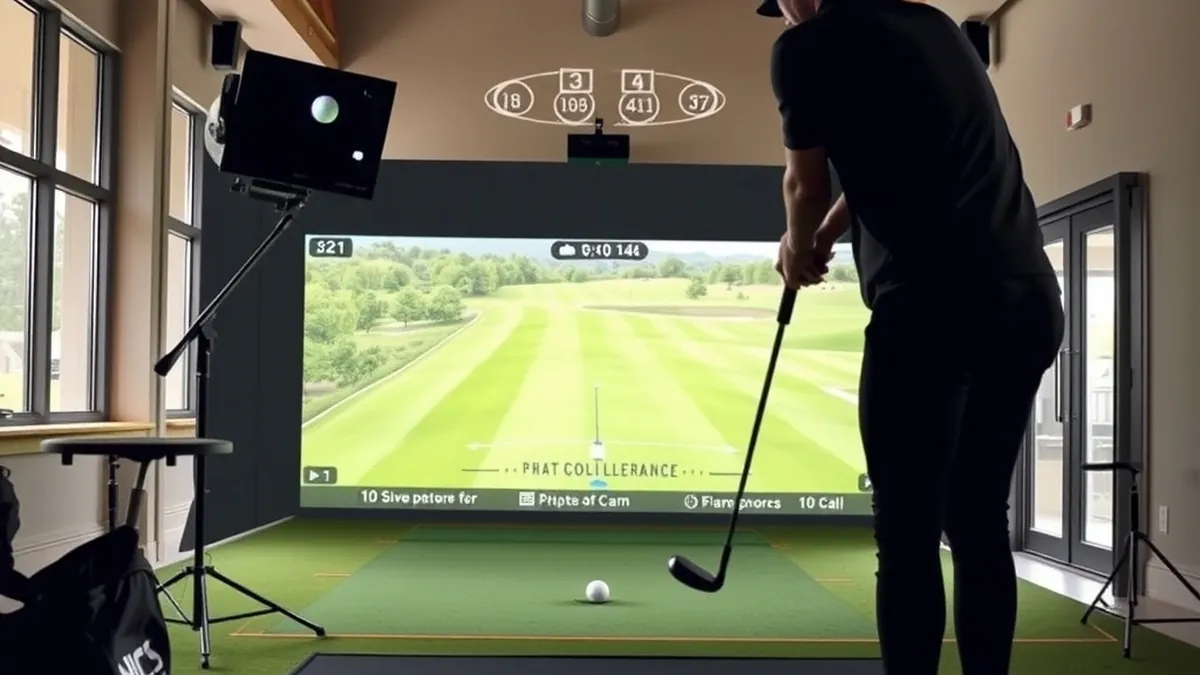
Most golfers need a minimum ceiling height of 9 feet, with 10 feet or more recommended for taller players and full swings.
- Minimum ceiling height
- 9 feet
- Recommended ceiling height
- 10 feet or more
- Taller golfers (6 ft+)
- 10.5 to 12 feet
- Safety clearance above clubhead
- 6 to 12 inches
Some links on this page are affiliate links.If you buy through them we may earn a commission at no extra cost to you. We do not accept payment for rankings. Read the full disclosure.
Golf simulator ceiling height depends on your height, your longest club, and your swing plane. For most golfers, a 9-foot ceiling is the absolute minimum, while 10 feet or more is the safer standard. Taller players and steeper swingers often need 10.5 to 12 feet to avoid contact with lights, joists, or the ceiling itself.
Why Ceiling Height Comes First
Room measurements determine what hardware fits, not the other way around. You can swap a launch monitor or change a hitting mat, but you cannot easily raise a ceiling after framing is done. Before selecting a simulator package or enclosure, measure the floor-to-ceiling height at the hitting area and at any point where your club might travel during the backswing or follow-through.
Ceiling height also interacts with room length and width. A low ceiling in a long room still restricts your swing, while a high ceiling in a narrow room may not matter if you cannot address the ball safely. Treat ceiling height as the first constraint in your build, not an afterthought.
Minimum Ceiling Height by Golfer Height
These figures are estimates based on typical standing height and swing geometry. Your actual requirement depends on club length, swing plane, and whether you hit a draw or fade.
| Golfer height | Minimum ceiling | Recommended ceiling |
|---|---|---|
| Under 5 ft 6 in | 8 ft 6 in | 9 ft to 9 ft 6 in |
| 5 ft 6 in to 6 ft | 9 ft | 9 ft 6 in to 10 ft |
| Over 6 ft | 9 ft 6 in | 10 ft to 11 ft or more |
A shorter golfer with a shallow swing may clear a 9-foot ceiling with a driver. A taller golfer with an upright swing and a 45-inch driver shaft may need 10.5 feet or more. Measure your own swing before committing to a room.
How to Measure Your Required Clearance
Stand in the intended hitting area with your longest club, usually a driver. Take a normal backswing and follow-through while a helper measures the highest point of the clubhead or your hands, whichever is higher. Add at least 6 inches of safety clearance above that point, and 12 inches if you share the room with others or want a margin for off-center swings.
If the highest point reaches 9 feet 2 inches, your ceiling should be at least 9 feet 8 inches. If it reaches 10 feet, you need a ceiling of 10 feet 6 inches or higher. This arithmetic applies to every golfer in the household. Use the tallest player’s measurement as the design standard.
Ceiling Obstructions and Real-World Limits
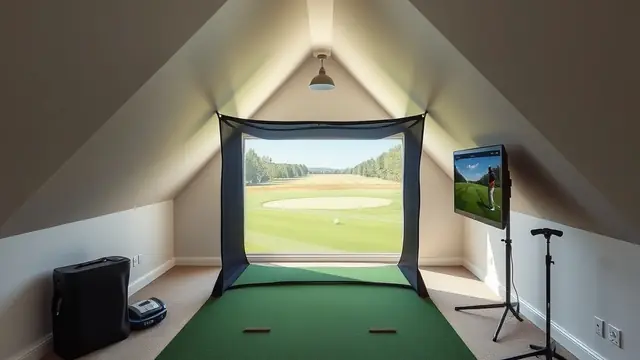
A bare ceiling measurement is not the whole story. Ceiling fans, recessed lighting, sprinkler heads, beams, and ductwork reduce usable height. A 9-foot ceiling with a hanging light fixture may effectively provide only 8 feet 6 inches of clearance.
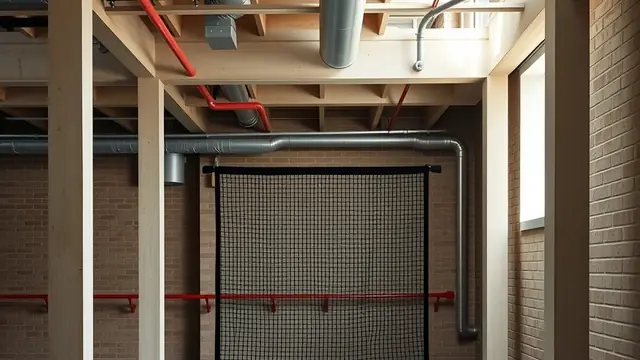
Basement installations often face additional obstacles. Low-hanging pipes or support columns can force you to relocate the hitting area or accept a shorter club selection. If you are converting a basement, review the full layout before ordering an enclosure. More details on basement constraints are available in our guide to golf simulator basement setups.
Cost Implications of Ceiling Height
Raising a ceiling is expensive. If your current ceiling is 8 feet and you need 10 feet, options include removing a dropped ceiling, reframing, or adjusting floor joists. Contractor estimates for ceiling height modifications commonly range from several thousand dollars to tens of thousands, depending on structural work and local labor rates. These are estimates; obtain a written quote before proceeding.
By comparison, choosing a room with adequate height from the start costs nothing extra. If you are selecting between rooms in a home, prioritize ceiling height over square footage. A 10-foot ceiling in a smaller room is usually more simulator-friendly than an 8-foot ceiling in a large room.
Launch Monitor and Enclosure Considerations
Most launch monitors do not impose a strict ceiling height requirement, but they do need unobstructed ball flight and safe mounting. Ceiling-mounted units require clearance above the hitting area, while floor-standing units need space behind the ball. Check the manufacturer’s mounting guide before finalizing your room layout. For help choosing a monitor, see our overview of the best launch monitor options.
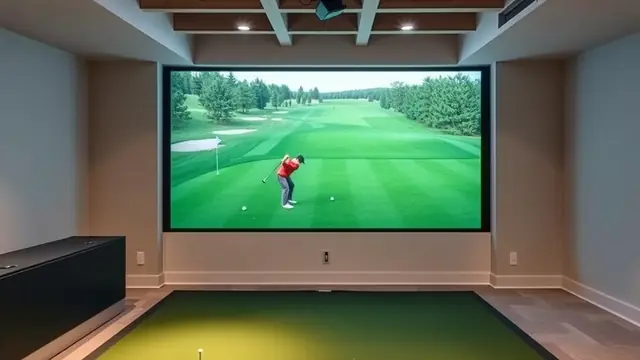
Impact screens and enclosures hang from the ceiling or a frame, but they do not reduce the vertical space your club needs during the swing. A screen positioned close to the ceiling still leaves your clubhead exposed at the top of the backswing. If you are planning an enclosure, review mounting dimensions and height requirements in our guide to golf simulator enclosures.
Practical Recommendations by Use Case
For a single golfer under 6 feet with a shallow swing, 9 feet is often workable, though tight with a driver. For households with multiple players or anyone over 6 feet, target 10 feet as a practical minimum. If you regularly hit driver and fairway woods, 10.5 to 11 feet provides a more comfortable margin.
If your ceiling is fixed at 8 feet or 8 feet 6 in, consider shorter clubs, half swings, or putting and chipping practice only. Full swings in that environment carry a real risk of damage to the ceiling, light fixtures, or the club itself. Do not rely on netting alone to solve a height problem; netting contains balls, it does not create swing clearance.
Start with the tallest golfer, the longest club, and the highest point of the swing. Add at least 6 inches of clearance, account for obstructions, and choose your hardware only after the room dimensions are confirmed.
Frequently asked questions
What is the minimum ceiling height for a golf simulator?
Nine feet is the common minimum for many golfers, but it can be tight for taller players or longer clubs.
Can I use a golf simulator with an 8-foot ceiling?
An 8-foot ceiling is generally too low for full swings and risks contact with the ceiling or light fixtures.
How much clearance do I need above my clubhead?
Plan for at least 6 to 12 inches of clearance between the highest point of your swing and the ceiling.
Does shaft length affect ceiling height requirements?
Yes. Longer drivers and fairway woods create a higher swing arc than shorter irons and wedges.
Should I measure my actual swing before building?
Yes. Swing your longest club in the room and measure the highest point to confirm safe clearance.
Can I install impact netting close to the ceiling?
Netting can hang near the ceiling, but your clubhead still needs vertical clearance during the swing.
Sources
Some links are affiliate links.If you buy through them we may earn a commission at no extra cost to you. We do not accept payment for rankings. Read the full disclosure.