Golf Simulator Garage Flooring: Best Options
Compare garage flooring for a simulator bay: turf, interlocking tiles, epoxy, and mats, with cost, load, and installation notes.
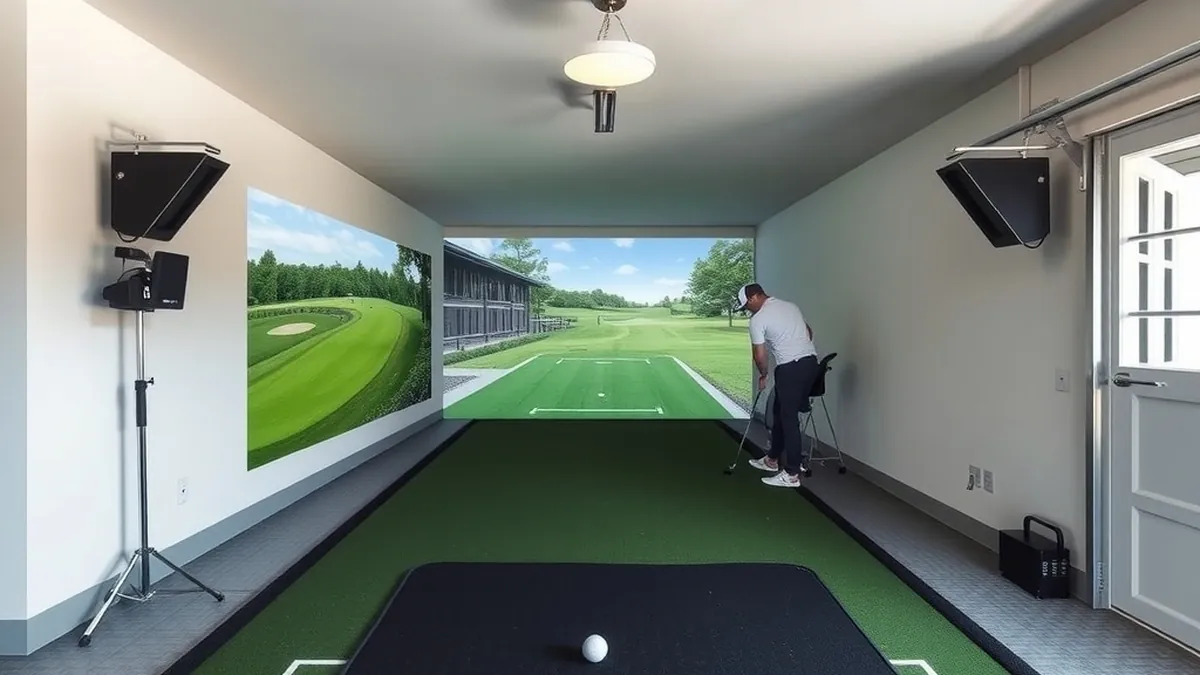
Use rigid interlocking tiles or a plywood subfloor over concrete, then add a golf impact mat; expect roughly $2–$8 per square foot for the base layer.
- Best base for most garages
- Rigid plastic interlocking tiles over concrete
- Typical cost range
- $2–$8 per square foot (estimate)
- Minimum slab thickness
- 4 inches of concrete
- Key concern
- Cracking, moisture, and rolling-load limits
Some links on this page are affiliate links.If you buy through them we may earn a commission at no extra cost to you. We do not accept payment for rankings. Read the full disclosure.
What Flooring Works in a Garage Simulator
The short answer is that a garage simulator floor needs a stable base over concrete, plus a hitting mat on top. Garage slabs are hard, uneven, and often damp, so hitting directly on concrete is uncomfortable and can wear out clubs and mats faster. Most home builders use rigid interlocking tiles or a plywood subfloor, then place a golf impact mat over the hitting area.
Start by measuring the garage bay where the simulator will live. A typical two-car garage is about 20 to 24 feet wide and 20 to 24 feet deep, but the simulator only needs a dedicated hitting zone. Leave room for the screen, enclosure, and any furniture or storage along the walls.
Check the Slab First
Before buying flooring, inspect the concrete. Look for cracks, spalling, and signs of moisture. A standard residential garage slab is usually 4 inches thick, though thickness varies by builder and local code. If the slab has active cracks or water seepage, fix those issues before covering the floor. Covering a damp slab with impermeable flooring can trap moisture and cause odors or mold underneath.
A simple moisture check is to tape a 2-foot square of plastic sheeting to the concrete and leave it for 24 to 48 hours. If condensation appears underneath, the slab is releasing moisture vapor. That does not rule out a simulator, but it argues for moisture-tolerant tile or a vapor barrier rather than glued-down wood products.
Base Layer Options
Rigid plastic interlocking tiles are a common choice for garage simulators. They snap together without adhesive, tolerate temperature swings, and can be removed if you sell the house. Tiles typically run from about $2 to $5 per square foot, depending on thickness and surface texture. For a 12-by-15-foot hitting bay, that is 180 square feet, or roughly $360 to $900 for the tile alone.
Plywood subflooring is another option. A 3/4-inch sheet costs roughly $40 to $60, so covering 180 square feet requires about five sheets, or $200 to $300 in material. You would fasten the plywood to the slab with sleepers or adhesive, then lay the hitting mat on top. Plywood feels firmer underfoot than some tiles, but it can trap moisture if the slab is damp.
Rolled rubber or foam underlayment is cheaper, often under $2 per square foot, but it compresses under rolling launch monitor carts and heavy simulator frames. It works better as a secondary layer beneath tiles or plywood than as the only base.
Here is a rough cost comparison for a 12-by-15-foot hitting area:
| Material | Estimated Cost per Sq. Ft. | Total for 180 Sq. Ft. |
|---|---|---|
| Interlocking tile | $2–$5 | $360–$900 |
| Plywood subfloor | $1.10–$1.70 | $200–$300 |
| Rolled rubber underlayment | Under $2 | Under $360 |
These are estimates. Prices vary by region, brand, and whether you buy in bulk.
Load Limits and Rolling Weight
Garage flooring must support more than a golfer’s weight. A launch monitor on a cart, a hitting bay frame, and a golf bag can add hundreds of pounds concentrated on small caster wheels. A typical golfer weighs 150 to 200 pounds, but a cart with a launch monitor and accessories might weigh 50 to 100 pounds, with that load spread across four wheels. Each wheel could carry 12 to 25 pounds, which is fine for most rigid tiles.
The concern is point loading. A narrow caster wheel can press into softer tile or foam and create permanent dents. If you plan to roll equipment across the floor regularly, choose tiles rated for rolling loads or place plywood under the cart path. Check the manufacturer’s load rating before buying; do not assume all garage tile is equal.
For the hitting area itself, a standard golf impact mat distributes club and body weight across several square feet. The mat does not need to support vehicle weight, but it should not shift during a swing. Many users screw or tape the mat to the subfloor, or build a wooden hitting platform that locks the mat in place.
Temperature and Comfort
Garages are not climate-controlled. In winter, concrete can be cold enough to make a session unpleasant. In summer, the slab can absorb radiant heat. Interlocking tile adds a small thermal break, but it is not insulation. If you use the simulator year-round, consider a garage heater or wear shoes with thick soles.
Anti-fatigue mats can help if you stand for long periods, but do not place thick foam under the hitting mat. The hitting surface needs to be firm so the club interacts with the mat consistently. Use anti-fatigue padding in the standing area behind the hitting zone, not under the ball position.
Installation Steps
- Clean the slab thoroughly. Sweep, vacuum, and degrease any oil stains.
- Test for moisture with the plastic sheet method described above.
- Lay out the hitting zone dimensions and mark them on the floor.
- Install the base layer. For tiles, start at one corner and snap pieces together. For plywood, cut sheets to fit and fasten them according to the product instructions.
- Place the hitting mat in the hitting zone. Secure it if it slides.
- Set up the launch monitor, screen, and enclosure around the mat.
Leave expansion gaps around the perimeter if the tile manufacturer recommends them. Garage temperatures swing enough that materials can expand and contract slightly.
Where This Fits in Your Build
Flooring is one piece of a larger simulator project. If you are still choosing a launch monitor, see our guide to the best launch monitor. For full-room planning, including ceiling height and enclosure size, read our golf simulator ceiling height article. If you are comparing overall budgets, our golf simulator cost guide breaks down typical spending by tier.
You can also pair this with our golf simulator enclosure article to see how the hitting bay structure relates to the floor beneath it. For below-grade alternatives, our golf simulator basement guide covers slab and moisture issues common in underground rooms.
A solid garage floor makes the simulator more comfortable and protects your equipment. Measure the bay, check the slab, pick a base that matches your budget and moisture conditions, and install a hitting mat that stays put. The rest of the simulator experience builds from there.
Next, compare best golf simulator under 10000, best golf simulator, best launch monitor. before you commit.
Frequently asked questions
Can I put a simulator directly on garage concrete?
You can, but concrete is hard on joints and clubs. Most builders add a subfloor or tiles plus an impact mat for comfort and protection.
How thick should garage flooring be for a simulator?
A 4-inch concrete slab is standard for residential garages. Added underlayment or tiles usually range from 0.5 to 1 inch depending on the product.
Do I need a vapor barrier in a garage?
It depends on your climate and slab condition. If moisture comes up through the concrete, a barrier or moisture-tolerant tile helps prevent mold and odors.
Can I roll a launch monitor cart over interlocking tiles?
Many rigid tiles support rolling loads, but check the product’s pound-per-wheel rating. Caster wheels can concentrate weight and crack softer tiles.
Is garage flooring different from basement flooring?
Yes. Garages face temperature swings, vehicle fluids, and slab moisture, while basements mainly manage humidity and hydrostatic pressure.
What goes on top of the garage floor?
A golf hitting mat or impact mat sits on the finished base. Some users add a hitting bay enclosure or netting over the flooring area.
Sources
Some links are affiliate links.If you buy through them we may earn a commission at no extra cost to you. We do not accept payment for rankings. Read the full disclosure.