Soundproofing a garage simulator
What actually reduces simulator noise: mass, decoupling, and sealing for ball impact, screen thump, and garage-door gaps. Includes STC estimates.
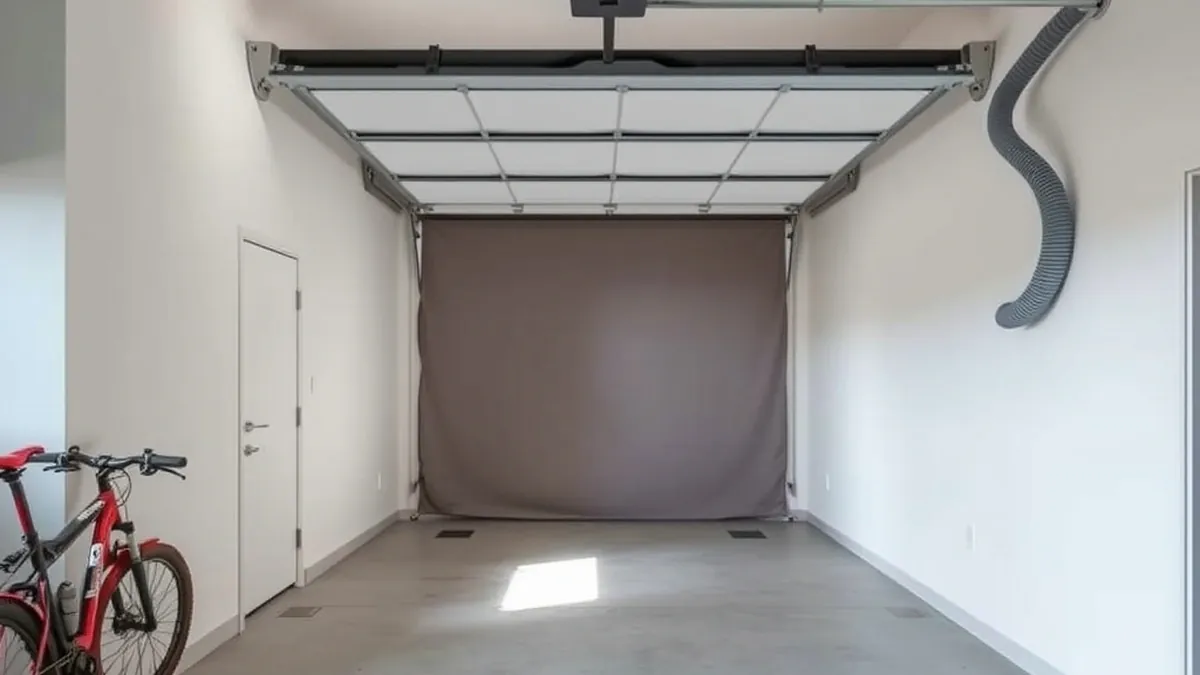
Ball impact is a sharp click that mass and sealing kill; screen thump is low-frequency energy that needs decoupling. Double drywall on resilient channels, sealed doors, and a decoupled screen frame do more than foam.
- Main noise paths
- Screen thump, ball impact, door gaps
- Best first step
- Seal gaps and flanking paths
- Wall assembly
- Double 5/8 in drywall + resilient channels
- Typical budget
- $2,000–$6,000 for a serious build
Some links on this page are affiliate links.If you buy through them we may earn a commission at no extra cost to you. We do not accept payment for rankings. Read the full disclosure.
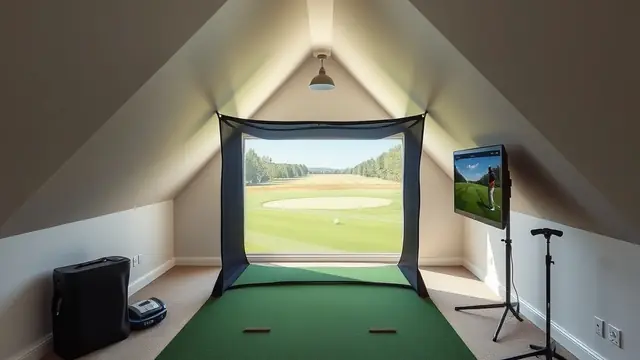
Soundproofing a garage simulator comes down to three levers: mass, decoupling, and sealing. Foam is not one of them. Ball impact is a short, sharp click that mass and gaskets can block; screen thump is low-frequency energy that travels through the frame and joists unless you break the structural connection.
Airborne sound travels through the air and through gaps; structure-borne vibration travels through framing, drywall, and the floor, and it is the harder problem in a garage bay.
What the noise actually is
A golf ball hitting a screen at speed produces two events. The first is a broadband impact click, heavy in the mid and high frequencies. The second is a low-frequency thump as the screen and frame absorb the energy and move.
Those two events need different treatments. Mass and sealing handle the click. Decoupling and damping handle the thump. A wall that stops the click can still pass the thump into the room above or the bedroom behind it.
There is also the garage door. A standard door is a thin, flexible panel with gaps at the sides and bottom. It is often the weakest path in the room, and no amount of wall insulation fixes it.
Airborne noise versus structure-borne vibration
Airborne noise is what you hear through the wall: the impact, the sound of the simulator software, conversation. It is rated with sound transmission class, or STC, a laboratory number for how much sound a wall assembly blocks.
Structure-borne vibration is what you feel. When the screen frame is bolted to a shared wall, the impact sends energy into the studs and joists, and the drywall on the other side radiates it as sound. This is why a room can have a good wall assembly and still thump upstairs.
The practical consequence is that you cannot bolt a rigid frame to a shared wall and then fix the problem with insulation. You have to break the path: isolation pads, a freestanding frame, or a room-within-a-room approach.
What works: mass, decoupling, sealing
Mass is the simplest lever. Drywall is cheap and heavy, and a second layer adds meaningful transmission loss. Two layers of 5/8-inch gypsum on each side of a stud wall, with insulation in the cavity, is the standard high-performance assembly for a home bay.
Decoupling is the second lever. Resilient channels separate the drywall from the studs, so vibration has to cross a flexible connection. A double-stud wall goes further, but it costs floor space and money that most garages cannot spare.
Sealing is the third lever and the cheapest. Sound leaks through every gap, and a 1/8-inch gap around a door can undo much of the wall’s rating. Acoustic caulk at the perimeter, putty pads on outlet boxes, and gaskets on doors are high-value work.
Wall and ceiling assemblies, with STC estimates
The numbers below are typical published lab ratings for the assembly type, not a prediction of your room. Field performance is usually lower because of flanking paths and workmanship.
| Measure | Addresses | Typical STC or effect | Installed cost, 12 × 20 ft bay |
|---|---|---|---|
| Acoustic caulk and putty pads | Gaps, outlet leaks | Can recover 5–15 STC lost to leaks | $150–$350 |
| Double 5/8 in drywall + insulation | Airborne impact | STC 50–55 | $1,200–$2,000 |
| Resilient channels | Structure-borne vibration | Adds roughly 5–8 STC to a double-layer wall | $700–$1,200 |
| Mass-loaded vinyl, 1 lb/sq ft | Airborne low-mid | Adds roughly 3–8 STC when sealed | $700–$1,200 |
| Insulated garage door + seals | Door flanking | Noticeable reduction, no simple STC | $400–$1,200 |
| Foam acoustic panels | Echo inside the room | Near zero STC | $200–$600 |
| Decoupled screen frame | Screen thump | Reduces structural transfer | $100–$300 |
A single layer of 1/2-inch drywall on wood studs is often rated around STC 33. A single layer of 5/8-inch gets you a few points. The jump to a double layer with insulation and resilient channels is where the assembly starts to perform.
Mass-loaded vinyl is useful when you cannot add drywall thickness, for example behind a finished wall or around a door. It is a limp mass barrier, not a magic sheet. It needs sealed edges to work, and it does nothing for structure-borne vibration on its own.
The screen, frame, and floor
The screen is the source. A tight screen stores energy and releases it as a thump; a screen with some give and an air gap behind it is quieter. Tension the screen evenly but leave a little give at the bottom, and keep the screen from touching the wall.
Put absorption behind the screen. A layer of mineral wool or a moving blanket in the cavity absorbs some of the low-mid energy before it reaches the wall. It is not a substitute for wall mass, but it reduces the drum effect.
Decouple the frame. Neoprene pads under the feet, isolation washers at the anchors, and a freestanding enclosure all help. If the frame must attach to a wall, attach it to a non-shared wall or use a resilient clip system.
The floor matters in a garage. A mat on a concrete slab is fine, but a raised platform can transmit impact into the slab and the house. Rubber pads under the platform feet reduce that path, and a thick mat over the platform reduces the ball’s impact noise.
Doors, garage doors, and flanking paths
Interior doors are the most common weak point. A hollow-core door with a 1/4-inch gap at the bottom is close to an open window. Replace it with a solid-core door, add a perimeter seal and an automatic door bottom, and seal the frame to the drywall.
The garage door needs different treatment. Insulated panels help, and a weatherstrip kit around the perimeter plus a bottom seal closes the obvious gaps. If the door is not used for parking, a removable insulated panel set adds mass without disabling the door.
Flanking paths are everything else. Recessed lights, outlets, HVAC registers, and plumbing penetrations all need sealing. Back-to-back outlets in the same stud bay should be offset or wrapped with putty pads. Ducts that serve both the bay and the house need lined or flexible connections.
What does not work
Foam is the big one. Egg-crate foam and acoustic panels reduce reverberation inside the room, which makes conversation and the simulator audio sound better. They do not stop the impact from reaching the other side of the wall.
Blankets and carpets have the same limitation. They absorb high frequencies, so the room sounds duller, but the low thump passes through. If the complaint is “I can hear the ball hit from the bedroom,” absorption is the wrong tool.
A single extra layer of drywall without sealing is also a partial measure. The mass helps, but the gaps remain. Treat the assembly as a system: mass, decoupling, and seals together.
For the room layout that makes these treatments easier, see the basement build guide and the enclosure guide. If you are still planning the bay, the room dimensions guide shows how much space to leave behind the screen for an absorption cavity.
The short version
Seal first, add mass second, decouple the frame third. Double 5/8-inch drywall with insulation and resilient channels, a solid-core door with gaskets, and an insulated garage door cover most of the problem. Skip the foam if your goal is quiet in the next room.
Frequently asked questions
Does foam soundproof a garage simulator?
No. Foam panels absorb echo inside the room, which makes the bay sound tighter, but they add almost no sound transmission class rating to a wall. They are a comfort treatment, not a soundproofing measure.
What is the biggest noise path out of a simulator bay?
Gaps and flanking paths: door seals, outlet boxes, recessed lights, and HVAC ducts. A wall with a high lab rating still leaks if the edges are not sealed, so fix the openings before adding mass.
How much does it cost to soundproof a garage bay?
Seals, putty pads, and a door kit run about $300–$800. A full treatment with double drywall, insulation, resilient channels, and a decoupled screen frame runs $2,000–$6,000 for a two-car garage, depending on how much wall you open.
Is a hitting net quieter than an impact screen?
A tensioned screen behaves like a drum and produces a low thump that travels through the frame. A loose net has less drum effect but the ball still makes a sharp impact sound. Either way, decoupling the frame from the structure matters more than the choice of screen or net.
Do I need to soundproof the ceiling too?
If there is a bedroom or living space above the bay, yes. Use insulation, resilient channels, and a second layer of drywall, and seal every penetration. Noise flanking through joists can bypass a well-built wall entirely.
Can I keep the garage door usable after soundproofing?
Yes. Insulated door panels, weatherstripping, and a bottom seal reduce the door's contribution without disabling it. Never remove the door's safety features or springs; have a garage door technician adjust the hardware.
Sources
Some links are affiliate links.If you buy through them we may earn a commission at no extra cost to you. We do not accept payment for rankings. Read the full disclosure.